
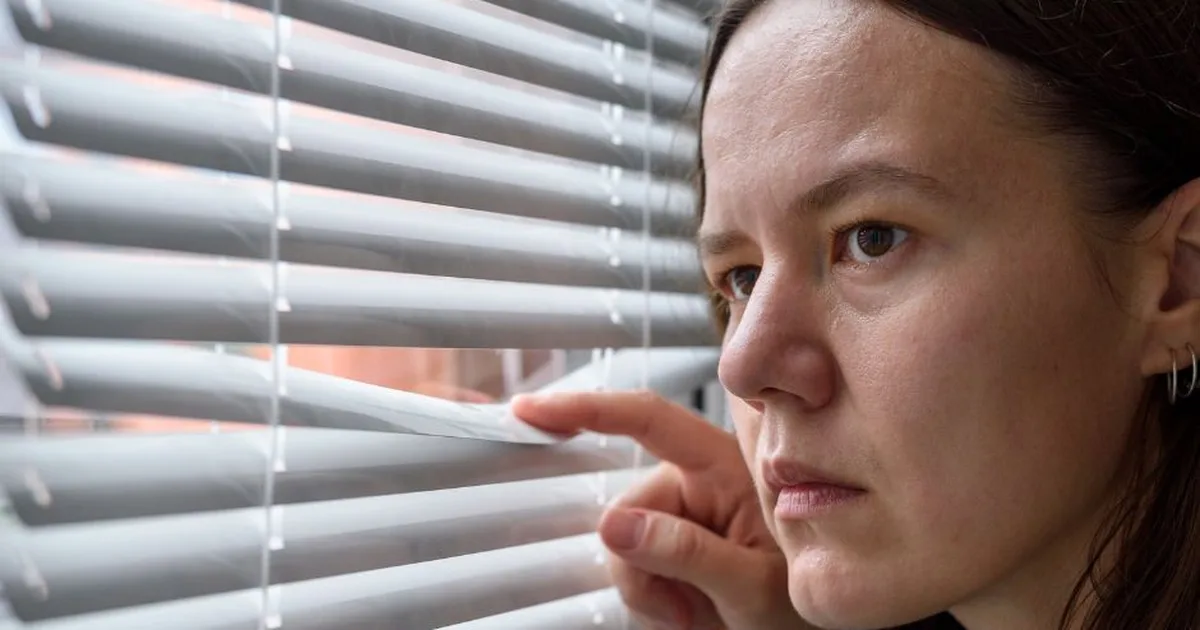
Perimenopause anxiety is real, common and often sudden, even in women who have never been anxious before. Fluctuating oestrogen and progesterone change how your brain responds to stress, and research shows anxiety is reported most often during perimenopause. But hormones can start menopause anxiety without being the reason it stays. When fear becomes a learned pattern, it can carry on through HRT, through medication and long after the original trigger has gone.
What you need to know
- Anxiety symptoms are reported more often in perimenopause than before the menopause transition.
- Hormonal changes make you more vulnerable to anxiety, but a learned fear response is often what keeps it going.
- HRT can settle physical symptoms without changing an established anxiety pattern, which is why so many women are still anxious on it.
- Anxiety in menopause is something you are experiencing, not who you have become, and the pattern behind it can change.
Jump to a section:
- Why am I suddenly anxious during perimenopause?
- What does menopause anxiety feel like?
- Can menopause cause panic attacks?
- Can menopause cause anxiety for no reason?
- Why is my anxiety worse during menopause?
- Why am I still anxious on HRT?
- Why am I so scared of dying in perimenopause?
- How can I manage menopause anxiety naturally, without medication?
- Why do I wake up with anxiety every morning in perimenopause?
- How long does menopause anxiety last, and does it go away?
- Frequently asked questions
Have you ever found yourself worrying about something that hasn’t happened, imagining everything that could go wrong, until your mind has built an entire disaster?
You know you’re overthinking. You tell yourself to stop. You might even know the thing you’re worrying about is unlikely to happen.
But the thoughts keep coming.
You wake up with anxiety every morning. You feel jittery for no reason. Some days you’re barely functioning, and nobody around you would ever guess.
You used to be confident, capable and in control. You managed your career, your family and whatever life threw at you. Now you’re questioning everything.
What on earth has happened to me?
I understand that feeling more than you might realise.
I’m Trish, a Certified Menopause Management Specialist, a woman going through menopause myself, and someone who has lived through crippling menopause anxiety. At the height of my corporate career, anxiety and low moods took over my life. I lost my confidence and eventually left the career I had worked so hard to build.
HRT helped my physical symptoms. It didn’t touch the anxiety.
I wanted to understand why. More than that, I wanted my life back. That search changed the direction of my life, and for more than seven years I’ve worked with women to understand why anxiety starts, why it stays and how to change it.
Anxiety isn’t always just about what’s happening to you now. Sometimes it’s about how your mind has learned to respond to what happened before.
And menopause can be the stage of life when that response becomes much harder to manage.
Why am I suddenly anxious during perimenopause?
Sudden anxiety in perimenopause happens because oestrogen and progesterone don’t decline in a neat, steady line. They swing, sometimes dramatically, and both help regulate the brain chemistry that keeps you calm. As they fluctuate, your stress response becomes more sensitive, so situations you handled comfortably for years can suddenly trigger fear.
One of the most common things women tell me is: “I’ve never been an anxious person. So why am I suddenly feeling like this?”
The biology answers that. Oestrogen supports serotonin, which steadies your mood, and GABA, your brain’s natural calming signal. Progesterone produces allopregnanolone, which works on the same calming system. When both hormones rise and fall unpredictably, that calming support becomes unreliable. The amygdala, your brain’s alarm, becomes quicker to fire, and cortisol, your stress hormone, has less to hold it back.
That’s why you might suddenly feel overwhelmed by a workday you used to love, frightened while driving or full of dread that seems to come from nowhere.
A 2026 systematic review of anxiety across menopausal stages found anxiety symptoms were reported more often during perimenopause and postmenopause than before the menopause transition, with the highest odds during perimenopause.
Hormonal changes can make you more vulnerable to anxiety without being the only reason the anxiety continues.
Picture yourself driving along a motorway, something you’ve done confidently for years. Suddenly a rush of anxiety hits. Your heart races. You desperately want to get off the road. Eventually you reach somewhere safe and it settles.
But something else happened during that drive. Your mind connected the motorway with danger. The next time you approach it, you remember how frightened you felt, you start predicting another episode, and you’re anxious before you’ve even reached the slip road.
The first episode may have been driven by hormones. The second is driven by memory and prediction.
This is how one anxious experience turns into a recurring pattern.
I explain this in more detail in Can Perimenopause and Menopause Cause Driving Anxiety?, and the same learned fear response shows up in meetings, social events and everyday life.
What does menopause anxiety feel like?
Menopause anxiety can feel like constant dread, racing thoughts, a pounding heart, irritability, feeling permanently on edge, poor sleep and losing confidence in things that used to feel easy. For some women it comes as panic attacks. For many, the hardest part is feeling like they’ve become a different person.
You might be avoiding social occasions because the thought of going out makes you anxious. You might no longer drive on certain roads. You might be struggling to make decisions because you keep questioning what could go wrong, or finding everyday responsibilities overwhelming when you’ve handled far bigger things in the past.
The confident, sociable, capable woman you remember seems to have disappeared.
And the people around you don’t always see it. On the outside you’re still functioning. You go to work, look after your family and get through the day. Inside, you’re using enormous amounts of energy just to cope.
I know that feeling. During my own menopause, it wasn’t only the anxiety that hurt. It was what anxiety was taking away: my confidence, my motivation, my enjoyment of life and eventually my career.
Menopause anxiety isn’t only measured in symptoms. It’s measured in the life it takes away from you.
Can menopause cause panic attacks?
Yes. Hormonal fluctuations can trigger palpitations, hot flushes and a racing heart, and an anxious mind can read those sensations as danger. That fear speeds the body up further, and a panic attack builds. The trigger may be hormonal, but the panic comes from how the mind interprets what the body is doing.
Imagine you’re sitting in a meeting and you notice your heart beating faster.
Why is my heart racing? What if something is wrong? What if I panic in front of everyone?
Your mind predicts danger. Your body responds to that prediction. Your heart beats faster still, you become more aware of every sensation, and the anxiety climbs.
Now you’re not simply anxious. You’re anxious about becoming anxious.
I call this the misfiring anxiety loop. Your protective response has been switched on by a perceived threat, not a real one. Every time you respond to that situation as if it’s dangerous, you teach your mind that it is.
That’s why I ask women to look at what happens before, during and after an anxious episode:
- What triggered it?
- What did your mind predict?
- What did you feel in your body?
- What did you do next: avoid the situation, seek reassurance, escape, or start checking yourself for more symptoms?
Those responses bring quick relief, but they also stop your mind from learning that the situation is safe.
New palpitations or chest pain should always be checked by your doctor first. Once the physical side has been ruled out, it’s the loop that needs attention.
Can menopause cause anxiety for no reason?
Menopause anxiety can feel as though it comes from nowhere, but there is usually a trigger you haven’t noticed. It might be a hormonal shift, a bad night’s sleep, a physical sensation, a memory or a thought that passes so quickly you barely register it. Sometimes the response has become so automatic that it fires before you’re aware of what set it off.
Think about learning to drive. At first every action needed conscious attention: gears, mirrors, pedals. With practice, it became automatic.
Emotional responses work the same way. If your mind has spent years meeting uncertainty with worry, that becomes its default. You don’t decide to worry. Your mind simply starts.
So you feel anxious watching television, having dinner with your family or the moment you wake up. Because you can’t see a reason, the anxiety becomes something else to worry about.
Why am I feeling like this? Is something wrong with me? Is something bad about to happen?
And the cycle feeds itself.
Not all unexplained anxiety is a learned pattern. Thyroid problems, other health conditions and medication side effects can all play a part, so it’s worth ruling those out with your doctor. When they have been, the pattern is usually the missing piece of the explanation.
Why is my anxiety worse during menopause?
Menopause often makes existing anxiety worse because hormonal changes and broken sleep land on top of a pattern that was already there. Many women have quietly managed worry for years. Menopause is the point where their usual ways of coping stop being enough.
Think about everything that arrives at the same time in midlife. Parents getting older and needing care. Children still needing you. Demanding careers. Relationships changing. Questions about who you are and what comes next. Then menopause adds another layer of physical and emotional change on top.
The International Federation of Gynecology and Obstetrics’ 2026 recommendations on menopause mental health highlight hormonal changes, sleep disturbance, previous mental health difficulties and life stress as factors to consider together.
You can’t understand a woman’s anxiety by looking only at her hormone levels. You need to understand the whole woman.
Let me introduce you to a woman I worked with whom I’ll call Meg.
Meg had lived with anxiety for most of her adult life, but she managed it. She had a successful, demanding career, a marriage, a family and a home. From the outside, she was doing well.
When we explored her past, something important came up. Meg’s mother had been a very anxious woman. She rarely mentioned when things were going well. There was always another problem to anticipate, another reason to be concerned. She wasn’t trying to teach Meg to be anxious, but children learn what is dangerous by watching the adults around them. Anticipating the worst became familiar to Meg.
Then her mother became seriously ill.
For two years, Meg lived with that uncertainty. What if she gets worse? What if something happens while I’m not there? What if I miss something important?
Then her mother died.
You might expect that once the thing she feared had happened, Meg’s mind would stop anticipating it. It didn’t. The worrying simply found new targets. Within hours she could move from one frightening thought to the next.
She became exhausted, tearful and unable to function as she had before. She took a sabbatical because the thought of going back to work frightened her. She withdrew from friends, felt herself drifting from her husband and started taking sleeping tablets because her mind wouldn’t settle at night.
In her own words, she felt like a shadow of the woman she used to be.
Meg’s story isn’t simply about hormones. It shows how an anxious pattern that has existed for years can become overwhelming after prolonged stress and grief, especially when menopause has taken away the sleep and resilience that used to hold it together.
In our work, we didn’t try to stop Meg ever having a worrying thought. We changed how she processed and responded to those thoughts. She started noticing the difference between a real problem and something her mind was predicting. The constant scanning for danger reduced, and she began to feel she was in control of her anxiety rather than her anxiety controlling her.
Why am I still anxious on HRT?
Many women are still anxious on HRT because HRT treats the hormonal side of menopause, not a learned anxiety pattern. If your mind has learned to predict danger, catastrophise or fear particular situations, steadier hormones won’t automatically undo that. Research supports this: hormone therapy does not reliably reduce anxiety in every midlife woman.
I understand this personally. When crippling anxiety hit during my own menopause, I started HRT. It helped my physical symptoms. Emotionally, I still wasn’t where I wanted to be. The anxiety stayed.
I’m far from alone. Some women start HRT and their mood, sleep and anxiety all improve. Others find their hot flushes and night sweats settle, but the fear carries on. Many women tell me the same about anti-anxiety medication: it took the edge off, but the fear underneath was still there.
Why? Because not every anxious response is being kept alive by hormones.
Imagine a woman who had her first panic episode while driving during perimenopause. Her hormones settle on HRT, but she still feels frightened approaching that same road. The original trigger has changed. The association between that road and danger hasn’t.
A systematic review presented to The Menopause Society in 2025 found hormone therapy does not consistently improve anxiety symptoms in midlife women. The International Menopause Society’s recommendations also note that evidence for hormone therapy specifically treating anxiety is limited.
I want to be very clear. I’m not against HRT. I use HRT myself, and I’ve seen how much it helps women with troublesome menopause symptoms.
Treating your hormones and changing an established anxiety pattern are not the same thing. Sometimes both need attention.
If you’re anxious despite HRT or medication, review your treatment with your prescriber, and look at whether an emotional pattern is keeping the anxiety going. I go deeper into this in This Is Why HRT Is Not Fixing Your Anxiety.
On HRT and still anxious? Book a free discovery call and we’ll look at what is keeping your anxiety going, and whether hormones are the whole story. Sessions are online, so I work with women in the UK, the US and beyond, and the booking calendar shows times in your own time zone.
Why am I so scared of dying in perimenopause?
A fear of dying in perimenopause often starts when a sensitised alarm system reads ordinary body sensations, like a racing heart or a wave of dizziness, as a threat to your life. The mind then starts searching for danger everywhere, and the fear spreads into everyday activities. It’s one of the most frightening forms of menopause anxiety, and one of the least talked about.
Let me tell you about Melisa.
By the time Melisa was referred to me, she had nearly given up hope of ever living without constant fear. She had tried anti-anxiety medication, but it hadn’t given her the improvement she needed. She had also tried benzodiazepines, which caused an unpleasant reaction.
For more than two years, anxiety had slowly taken away almost everything she enjoyed. And this was a woman who loved life. She was sociable and outgoing. She loved the gym, evenings out with friends and time with her husband.
By the time we met, her world had become very small. She wasn’t sleeping properly. She had stopped driving. She barely left her home. Friends had stopped inviting her out, and even her husband had stopped suggesting outings because he knew how frightened she was.
The saddest part was that Melisa had started accepting this as her life.
When we explored what was driving her anxiety, one thing stood out. At the centre of it was an overwhelming fear of dying.
A simple walk could turn into a prediction about becoming unwell. Going to the gym could set off thoughts about something happening to her heart. Almost everything had become a potential threat.
What interested me most wasn’t simply that she had frightening thoughts. It was the sequence her mind followed after they appeared. A thought would arrive. Her mind would instantly create a vivid scene of that thought happening. The scene set off an intense emotional response, and within seconds she was overwhelmed.
She wasn’t choosing to frighten herself. Her mind had built a fast, automatic way of processing fear.
Her mind was trying to protect her from danger, but the very process it used to protect her was keeping her frightened.
We worked on the underlying fear and on separating the three parts of that sequence: the thought, the frightening picture and the overwhelming emotion.
Having a frightening thought doesn’t mean you have to feel the fear as though it’s actually happening.
Within six weeks, Melisa went out for a proper walk with her husband for the first time in years. They walked quite a distance, including uphill. Weeks earlier, exerting herself physically would have sent her mind into panic.
This time her mind was calm. She wasn’t imagining something happening to her. She was simply walking with her husband, and she enjoyed it.
As our work continued, her energy came back. She started sleeping through the night and waking up rested. Instead of anticipating danger, she began looking forward to things again.
My favourite moment came towards the end of our work together. She booked tickets for herself and her husband to see their favourite band in a large concert arena. A woman who had spent more than two years barely leaving her home was planning an evening surrounded by thousands of people.
She told me she wasn’t anxious about going. She was looking forward to it.
That was about so much more than a walk, better sleep or concert tickets. Melisa was taking back her independence, her confidence, her relationship with her husband and her freedom to enjoy the things she loved.
Melisa’s experience was her own, and every woman’s progress is different. But her story shows something I believe passionately: the way your mind responds to fear today doesn’t have to be the way it responds for the rest of your life.
Does Melisa’s story sound like yours? Book a free discovery call. Tell me what anxiety has stopped you doing, and we’ll look at what is keeping the fear going and what it would take to change it.
How can I manage menopause anxiety naturally, without medication?
You can manage menopause anxiety without medication by lowering the physical load on your body and changing the pattern that keeps the fear firing. Sleep, movement, regular meals and less caffeine all help. Lasting change comes from understanding what started your anxiety, what keeps it going and retraining how your mind responds.
This is the question closest to my heart, because it’s exactly what I wanted to know when I was struggling. I didn’t want to feel calmer for a few hours. I wanted to understand why the anxiety kept coming back, and I wanted to feel like myself again.
The research is on the side of natural approaches. FIGO’s 2026 menopause mental health recommendations report that non-medication approaches, including lifestyle changes, therapy, mindfulness and exercise, have shown benefits. The NHS also has practical advice on managing menopause symptoms, including mood changes and anxiety.
Four things you can start this week
- Separate the thought from the event. When your mind hands you a frightening possibility, ask: Is this happening right now, or am I predicting it might happen?
- Ask whether there’s anything to do. If there’s a practical action, take it. If you’re only imagining another possible disaster, you don’t have to solve it. Not every thought is a warning.
- Notice your safety behaviours. Avoiding, checking your body, seeking reassurance. Each one gives quick relief and teaches your mind the danger is real. Pick one and do a little less of it.
- Lower the physical load. Protect your sleep, cut caffeine after midday, move your body every day and get troublesome menopause symptoms properly reviewed.
Calming an anxious response is useful. Changing the pattern that keeps switching it on is the real work.
Why one approach doesn’t fit every woman
After more than seven years of this work, one thing is very clear to me. Anxiety doesn’t develop the same way in every woman, so it can’t be changed the same way either.
For one woman, the anxiety is connected to an earlier traumatic experience. For another, it followed a bereavement or a relationship breakdown. Another learned in childhood that anticipating danger was the safest way to live. For another, it started in perimenopause when hormonal changes altered how she responded to stress.
They all feel anxious. But what drives the anxiety, and what keeps it going, is completely different.
That’s why I developed my integrated anxiety protocol, a powerful blend of evidence-based therapeutic approaches. The structure stays the same, but I apply it to the individual woman. I don’t start by handing every woman the same exercises and hoping something works. I start by understanding her.
- What started the anxiety, and what is keeping it going?
- Does her mind create frightening pictures, run an inner voice predicting danger, or set off physical symptoms before she even knows what she’s thinking?
- What did she learn from earlier experiences?
- What has anxiety stopped her doing, and what does she want back?
If the anxiety is connected to trauma, we look at the emotional impact of that experience first, within the scope of my work. Complex trauma may need specialist clinical support. If it followed a loss, the starting point may be coming to terms with what happened, and for some women forgiveness becomes part of that, where they choose it. If it began in perimenopause, we look at her symptoms, sleep and hormonal management. As a Certified Menopause Management Specialist, I help women understand what is happening and what to raise with their GP or menopause clinician, who makes the prescribing decisions.
Then we work on the loop itself, because even after the original trigger has been dealt with, the anxiety response can carry on as a pattern of its own. We change how she processes her triggers and responds to the thoughts and feelings they produce, so anxiety stops automatically taking control of her thoughts, emotions and behaviour.
That doesn’t mean she’ll never have an anxious thought again. Anxiety is a normal human emotion. It means ordinary thoughts and situations stop sending her into overwhelming fear.
This is the heart of my 8-week Menopause Reclaim Programme. It’s a natural approach, built around your experiences, your triggers and the way your mind processes fear, with a progress review at around four weeks so we can see what is changing and adjust.
Why do I wake up with anxiety every morning in perimenopause?
Waking with anxiety in perimenopause is common. Cortisol, your stress hormone, naturally peaks in the first hour after you wake, and night sweats and broken sleep leave your nervous system with less in reserve to handle it. If your mind has also learned to start each day scanning for problems, waking up itself becomes the trigger.
You’ve barely opened your eyes and you already feel tense, frightened or overwhelmed. Sometimes the thoughts start straight away. What have I got to deal with today? What could go wrong? What am I forgetting? Other times your body feels anxious before you’ve had a single conscious thought.
When you’re running on poor sleep, everyday demands feel twice as heavy. And before you’ve even got out of bed, you’re reacting to situations that haven’t happened.
Try this tomorrow morning:
- Notice the first thing your mind does when you wake. Is it responding to something real, or has it started its familiar routine of preparing for problems?
- Bring your attention back to where you are: the room, the light, your breathing, your feet on the floor.
- Remind yourself that a frightening prediction is not an event taking place.
- Give yourself a few minutes to start the day without following every anxious thought.
Persistent or severe morning anxiety deserves a proper assessment, especially when it affects your sleep, work or daily life. Where an established worrying pattern is part of it, changing that pattern changes your mornings.
How long does menopause anxiety last, and does it go away?
There’s no fixed timeframe for menopause anxiety. For some women it settles as hormones and sleep stabilise. For others it continues into postmenopause because a learned pattern is keeping it going, and waiting for menopause to end won’t change that pattern. Menopause anxiety can improve significantly, and some women find complete relief once the pattern is addressed.
The NHS explains that menopause symptoms can change over time, and emotional symptoms don’t follow a set timetable. Sleep, hormonal symptoms, previous anxiety, stressful life events, physical health and ongoing emotional patterns all play a part.
I’ve worked with women who had felt anxious for so long they could barely remember what calm felt like. They had accepted worrying as part of who they were. Through our work, they began to see that anxiety was something they experienced, not who they were. That gave us something to work with.
How long you’ve had anxiety does not decide how long it takes to change. A woman who has worried for twenty years is not facing another twenty years before she feels different.
Equally, no responsible practitioner should promise that every long-standing pattern can be resolved in a set number of sessions. That’s why I work in a structured programme with a review built in, so we can see what is changing and adjust how the protocol is applied. Some women also need medical or specialist mental health support alongside it.
What matters is real progress towards the life you want back.
Frequently asked questions
Can menopause cause anxiety?
Yes. Fluctuating oestrogen and progesterone affect serotonin and GABA, the brain chemicals that help keep you calm, which makes your stress response more sensitive. Research shows anxiety symptoms are reported most often during perimenopause. Hormones can trigger the anxiety, but a learned fear response is often what keeps it going.
What are the symptoms of menopause anxiety?
Common signs include constant dread, racing thoughts, a pounding heart, irritability, feeling on edge, panic attacks, poor sleep and losing confidence in things that used to feel easy. Many women start avoiding driving, social events or situations they once handled without a second thought.
Can perimenopause cause panic attacks?
Yes. Hormonal changes can bring palpitations and hot flushes, and an anxious mind can read those sensations as danger, which turns a physical symptom into a panic attack. Any new chest pain or palpitations should be checked by a doctor first.
Does HRT help menopause anxiety?
HRT helps some women’s anxiety, especially when it’s tied to night sweats and broken sleep. Research shows it doesn’t consistently improve anxiety for everyone. If anxiety has become a learned pattern, HRT alone may not change it.
How long does menopause anxiety last?
There’s no fixed timeframe. For some women it settles as hormones and sleep stabilise, while for others it continues into postmenopause because a learned anxiety pattern is keeping it going. How long you’ve had anxiety doesn’t decide how long it takes to change.
You deserve to feel like yourself again
Anxiety in menopause isn’t always as simple as declining hormones. Sometimes hormones are a big part of it. Sometimes past experiences and learned responses are too. And sometimes menopause is simply the point where a pattern you’ve carried for years becomes too heavy to manage.
That’s why I look at the whole woman, not just her symptoms or her hormone levels. Her experiences, her history, what triggers her anxiety and how her mind keeps it going.
The protocol is consistent. The application is personal.
Imagine waking up without immediately bracing for everything that could go wrong. Driving to see a friend without planning your escape route. Sitting at dinner with your family and actually being there, instead of somewhere in your head preparing for a disaster that never comes. Booking something for next month and looking forward to it.
You’ve already spent enough time worrying about what might happen. I want you to enjoy the life that’s happening now.
If anxiety is affecting your confidence, your relationships, your work or your enjoyment of life, book a free discovery call. Tell me what’s happening and what anxiety has stopped you doing. I’ll help you see what is keeping your anxiety going, and we’ll talk about whether my programme is the right fit for you. The call is online, so you can join from anywhere, and the calendar shows times in your own time zone.
You don’t have to keep trying to work this out on your own.
Trish
Trish the Menopause Coach
About the author
Trish Rimmer is a Certified Menopause Management Specialist and the founder of Trish the Menopause Coach, specialising in the emotional side of perimenopause and menopause. She also holds an MA and qualifications in CBT, Clinical Hypnotherapy and NLP.
After crippling anxiety and low moods during her own menopause led her to leave her corporate career, Trish spent more than seven years supporting women and developing her integrated anxiety protocol. She works online with women across the UK, the US and internationally, helping them reclaim their calm, confidence and enjoyment of life. Learn more about Trish and her work.
Important: This article is for education and emotional wellbeing information. Coaching does not replace medical or specialist mental health assessment and treatment. Persistent, severe or unexplained anxiety should be discussed with a healthcare professional. Do not stop or change prescribed treatment without talking to your prescriber.

1 Comment
This Is Why Hormone Replacement Therapy (HRT) Is Not Fixing Your Anxiety - Trish The Menopause Coach
[…] For the full picture of why anxiety starts in perimenopause and what keeps it going, read my guide to perimenopause and menopause anxiety. […]