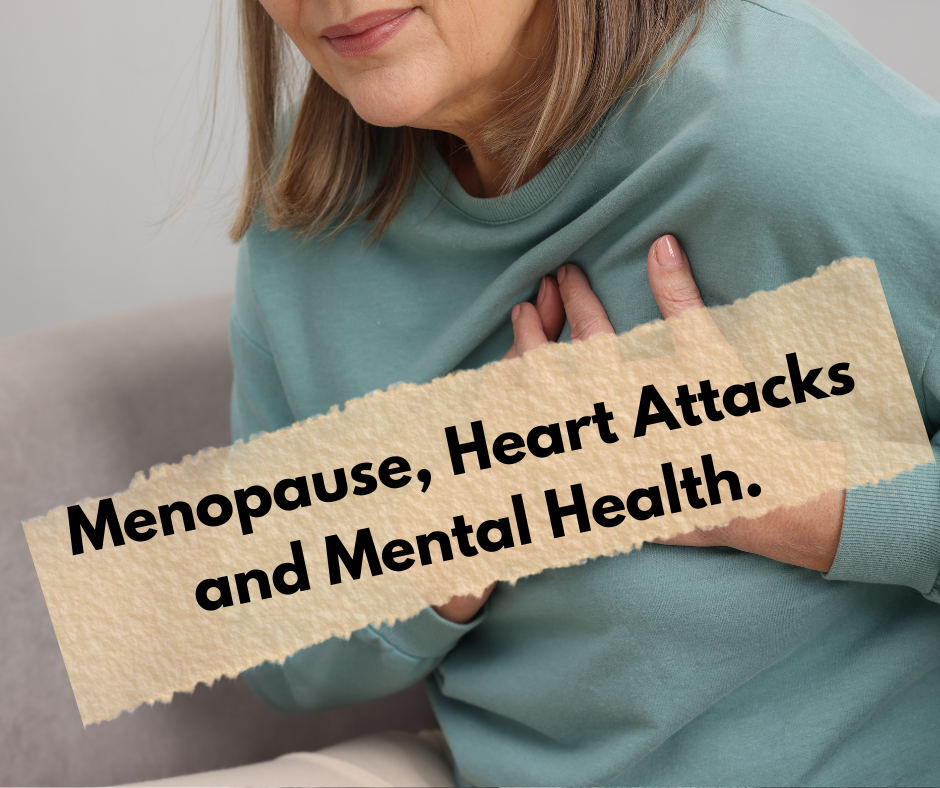
Why Menopausal and Post-Menopausal Women Are More at Risk of Heart Attacks — And Why Mental Health Is Being Ignored
As a menopause specialist, one of the most frustrating patterns I see is how often women’s long-term health risks are minimised during perimenopause and menopause.
Women come to me struggling with anxiety, chronic stress, low mood, panic, exhaustion, and loss of confidence. Many are high-achieving, capable women who have managed demanding careers, families, and responsibilities for decades. Almost all of them have been told, in one form or another, that what they are experiencing is just hormones.
What concerns me deeply is that this dismissal doesn’t just affect quality of life. It affects long-term health.
Including heart health.
Heart disease is the number one cause of death in women. Yet menopause is still not treated as the major turning point for cardiovascular risk that it truly is.
That gap in understanding has consequences.
Women Were Under-Represented in Heart Attack Research — Especially Menopausal Women
For decades, heart attack research was carried out almost entirely on men. Male bodies. Male hormones. Male symptom patterns.
Women were under-represented in clinical trials, and menopause was barely considered at all.
This matters because it shaped how heart disease is recognised, diagnosed, and treated. The “classic” heart attack symptoms taught in medicine were based on male presentations. Women’s symptoms often look different, feel different, and present more subtly.
As a result, menopausal women presenting with fatigue, anxiety, breathlessness, chest tightness, dizziness, or a persistent sense that something is wrong are frequently told it is stress, anxiety, or simply part of menopause.
Many are sent home.
This is one of the reasons heart diseases in women is still diagnosed later than it should be.
Organisations like the British Heart Foundation have repeatedly highlighted that women’s heart symptoms are missed or misunderstood, leading to poorer outcomes.
Menopause and Heart Attacks — What Happens to the Heart After Estrogen Drops
Recent research published in the European Heart Journal finally focuses on women and menopause. And it confirms what I see consistently in my work.
Menopause is not a side note.
It is a major biological turning point for women’s heart health.
When estrogen levels drop, the impact goes far beyond visible symptoms like hot flushes or night sweats. Estrogen plays a protective role in the cardiovascular system.
After menopause, several changes tend to occur at the same time:
- Cholesterol handling changes, often increasing LDL cholesterol
- Blood sugar regulation becomes less efficient
- Inflammation increases
- Blood pressure rises
- Fat storage shifts from hips and thighs to the abdominal area
This combination significantly increases cardiovascular risk.
The research also shows that women who go through early menopause, surgical menopause, or ovarian insufficiency face an even higher long-term risk of heart disease and stroke.
This is why menopause and heart attacks are directly linked — and why women need to be told this clearly and early. See the European Heart Journal – Advance Article (2025)
Why Menopausal Women’s Heart Symptoms Are Still Dismissed
Despite growing evidence, menopause symptoms linked to heart disease are still frequently dismissed.
From my perspective, this is not just a medical issue. It is a systemic one.
Women are still encouraged to “cope”, to manage symptoms quietly, and to keep functioning. Many fear speaking up at work or in clinical settings because they don’t want to be seen as weak, difficult, or unreliable.
This leads to a dangerous pattern where early warning signs are ignored — both by women themselves and by the systems meant to support them.
The NHS now acknowledges that menopause can affect long-term health, yet many women still report feeling brushed off when raising concerns beyond hot flushes.
The Link Between Menopause, Mental Health and Heart Disease
This is where menopause mental health becomes central to the conversation.
Heart health is not just about cholesterol numbers or blood pressure readings. It is deeply connected to emotional wellbeing and nervous system regulation.
During perimenopause and menopause, many women experience:
- Anxiety that feels new or worsening
- Chronic stress that never fully switches off
- Low mood or depression
- Poor sleep
- Emotional overload and overwhelm
These are often normalised or treated as separate from physical health. They are not.
Long-term anxiety and chronic stress keep the nervous system in a state of fight-or-flight.
This increases cortisol, drives inflammation, disrupts blood sugar regulation, and places ongoing strain on the cardiovascular system.
In simple terms:
Menopause anxiety affects the heart
Chronic stress during menopause affects the heart
Long-term low mood or depression affects the heart
The Mental Health Foundation has consistently highlighted the impact of chronic stress and anxiety on physical health outcomes, including cardiovascular disease.
Menopause Anxiety and Chronic Stress — How Emotional Health Impacts the Heart
One of my biggest frustrations is how often women are praised for “coping”.
Coping is not neutral.
Living in a constant state of high alert, emotional suppression, or stress resilience comes at a physiological cost. Over time, this stress load accumulates in the body.
The Mind recognises that long-term anxiety and depression significantly affect physical health. Yet this connection is rarely explained to menopausal women in a meaningful way.
Menopause is often the tipping point where emotional patterns that were previously manageable become overwhelming. This is not weakness. It is biology.
Why Hormone Treatment Alone Does Not Resolve Menopause Anxiety or Heart Risk
Hormone replacement therapy can be a valuable tool for many women. I work with women who are on HRT and women who are not.
But HRT is not a cure-all.
Many women come to me confused and distressed because their physical symptoms improve, yet their anxiety, panic, or emotional dysregulation remains.
What’s happening is that menopause can alter how the brain processes information and how safe a woman feels in her body. If fear responses and anxiety patterns become embedded during this transition, they do not automatically disappear once hormones stabilise.
The nervous system has learned a response.
Learned responses can be reversed — but not by ignoring emotional health.
This is where menopause emotional wellbeing must be addressed alongside hormonal and lifestyle support.
Can Heart Attack Risk Be Reduced After Menopause?
Yes. And this is important.
Menopause does not mean heart disease is inevitable.
Research shows that cardiovascular risk can be reduced through:
- Appropriate use of HRT where suitable
- Regular movement and strength training
- Improved sleep quality
- Effective stress regulation
- Emotional and mental health support
- Personalised menopause care
The British Menopause Society supports a holistic approach to menopause care that considers long-term health, not just symptom control.
But this only works when women are given the full picture early enough to act.
Why Emotional Wellbeing Must Be Prioritised in Menopause Care
This is why, in my work, emotional wellbeing is not optional.
It is foundational.
You cannot fully enjoy life, work, relationships, or success if you are constantly anxious, emotionally overwhelmed, or living in survival mode. And you cannot protect long-term heart health while ignoring the nervous system.
Menopause is often the moment when women realise that pushing through no longer works.
Which is why I ask every woman I work with to prioritise her emotional wellbeing and mental health as part of menopause care.
If you are struggling with menopause anxiety, low mood, chronic stress, panic, or emotional overwhelm, and you want a natural, effective approach, I can support you.
See my Emotional Reclaim Protocol, Menopause Anxiety Support, or Menopause Reclaim Programme page.
You deserve care that looks at the whole woman, not just symptoms and not just prescriptions.